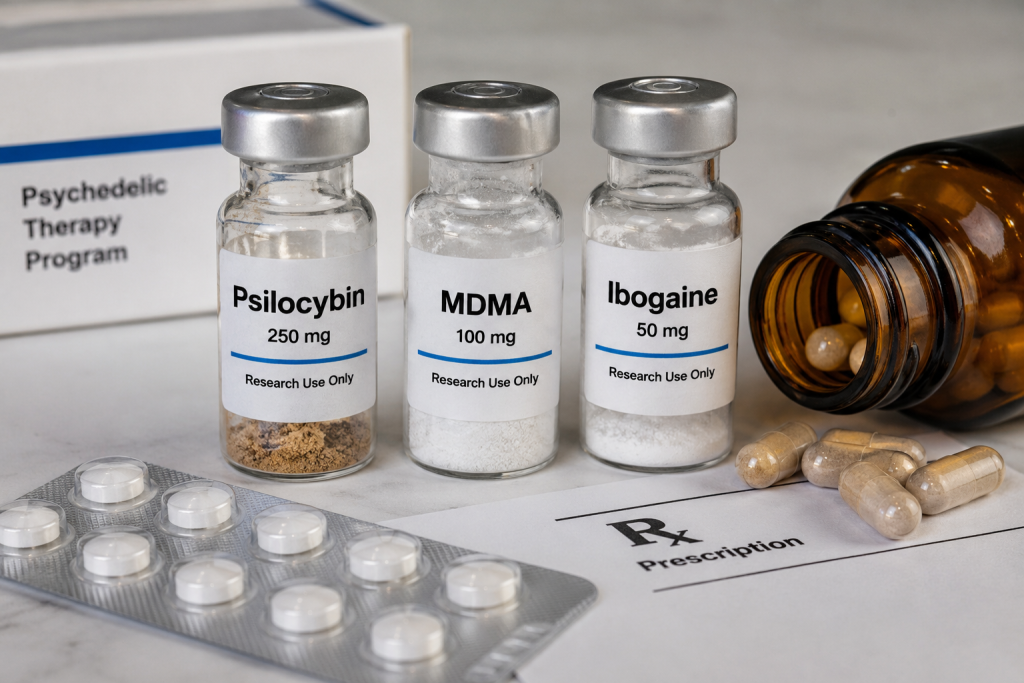
In April 2026, U.S. President Donald Trump signed an executive order aimed at accelerating regulatory pathways for psychedelic therapies, particularly for substances such as ibogaine, psilocybin, and MDMA. The decision sparked strong reactions across medical, legal, and political circles because it represents a significant departure from the traditional American “war on drugs” approach. Although this is not the first instance of psychedelic liberalization or medical use worldwide, it is an exceptionally unusual move at the level of the U.S. federal government. What makes the initiative particularly significant is that it comes from a Republican administration historically associated with strict drug enforcement and “law and order” politics.
Psychedelic therapies have existed on the margins of medicine and scientific research for decades. In recent years, several countries have gradually liberalized or institutionalized their medical use. Switzerland has permitted limited psychedelic-assisted therapy programs since the 1990s. Canada began granting special exemptions for psilocybin use in palliative care in 2019. Australia became the first country in 2023 to nationally authorize psychiatrists to prescribe MDMA and psilocybin for specific psychiatric diagnoses. U.S. states such as Oregon and Colorado have already developed legalization or decriminalization models for psilocybin.
In other words, the medical use of psychedelics is not itself unprecedented. However, the U.S. federal executive branch has never before taken such a direct and politically powerful step toward their institutional integration.