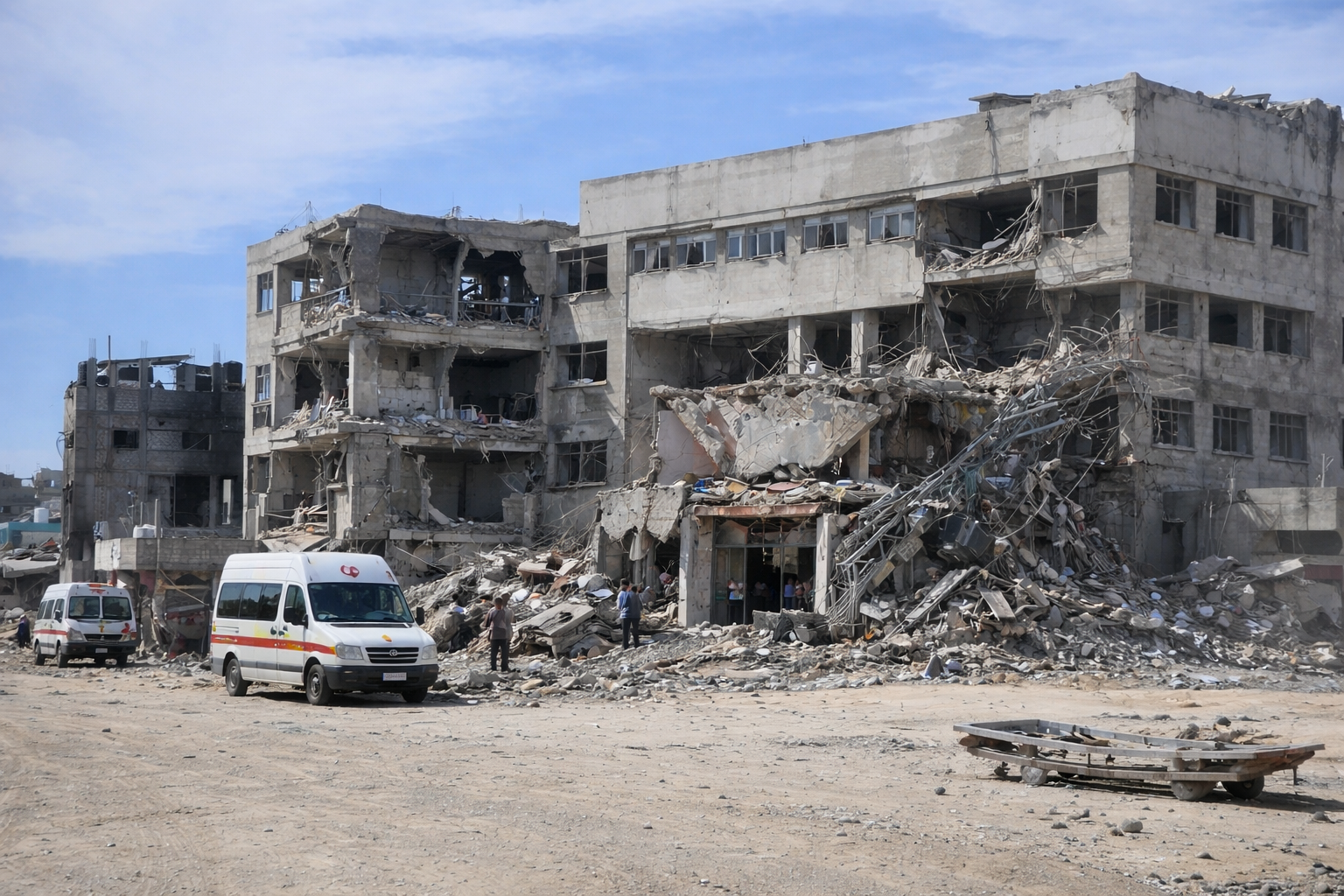
The increasing frequency of attacks on healthcare facilities in modern armed conflicts highlights a serious erosion of the core principles of international humanitarian law. Despite clear legal protections for hospitals and medical personnel, recent cases from Afghanistan, Sudan, and the broader Middle East reveal a widening gap between established norms and their enforcement. This blog examines the key legal provisions safeguarding healthcare systems, identifies the main challenges in their implementation, and outlines concrete mechanisms to strengthen accountability and prevent the further degradation of healthcare protection in times of war.
Modern armed conflicts are entering a new phase in which the protection of healthcare facilities can no longer be taken for granted, either normatively or operationally. While international humanitarian law clearly defines hospitals as protected objects, the increasing frequency of attacks points to deeper structural problems—weakening international institutions, political fragmentation, and a growing crisis of multilateralism.
In this context, the central question is no longer whether rules exist, but whether they can be effectively enforced, or whether healthcare systems will gradually lose their protected status in wartime.