News

Stay ahead in global healthcare!

ECHA Seeks Experts: Open Call for Scientists and Technical Specialists to Support Chemical Safety

The European Chemicals Agency (ECHA) has launched an open call to establish a pool of external experts who can provide specialised scientific and technical support, when needed, to its committees for risk assessment and socio-economic analysis. Experienced professionals are sought in the fields of science, risk assessment, substitution of hazardous chemicals, economics, and health, safety and environment (HSE).
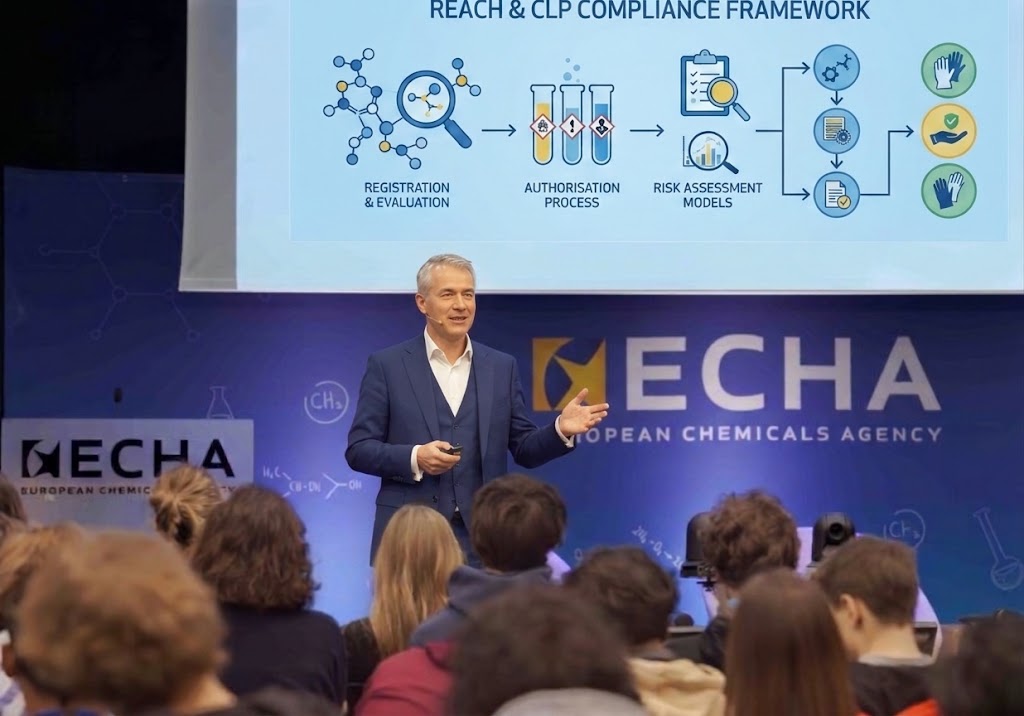
The European Chemicals Agency is expanding the pool of experts who can contribute to the scientific assessment of issues related to chemical safety in the European Union. The call is aimed at experienced professionals whose specialised knowledge can support ECHA’s committees when complex questions arise or additional expertise is required.
The call is open to scientists, risk assessors, specialists in alternatives analysis and/or substitution, economists, and health, safety and environment (HSE) technical specialists. According to ECHA, experts included in the pool may be invited to contribute to the committees’ work on a case-by-case basis. Inclusion in the pool does not mean that experts will automatically become permanent committee members. Instead, their expertise may be called upon when a particular case requires specialised knowledge to support the development of a robust scientific opinion.

RAC and SEAC Play a Key Role in European Chemical Safety Policy

External experts will support two important scientific bodies within ECHA – the Committee for Risk Assessment (RAC) and the Committee for Socio-Economic Analysis (SEAC).
The Committee for Risk Assessment (RAC) develops scientific opinions on the risks posed by chemicals to human health and the environment. Its work includes opinions on the harmonised classification and labelling of hazardous substances, proposals for restrictions and applications for authorisation, as well as scientific opinions on occupational exposure limits. RAC does not make final regulatory decisions. Its scientific opinions provide an important basis for subsequent decision-making at European level. The committee assesses available scientific evidence, including information on hazards and exposure, and considers relevant information submitted during public consultations.
Another key body is the Committee for Socio-Economic Analysis (SEAC), which examines the broader economic and societal consequences of potential regulatory measures. For proposed restrictions, SEAC assesses their socio-economic impact. In the case of applications for authorisation, the committee considers socio-economic factors as well as the availability, suitability and technical feasibility of possible alternatives. Information submitted by third parties during the relevant procedures can also contribute to the committee’s assessment.
This is why ECHA’s new call targets experts with a wide range of professional backgrounds. Chemical safety assessments increasingly require interdisciplinary expertise, ranging from toxicology and exposure assessment to economics, alternatives analysis and the technical aspects of possible substitutes.

Experts Will Be Called Upon According to Specific Needs

The purpose of ECHA’s call is not to establish another permanent membership structure, but to create a pool of external experts from which individuals with the appropriate expertise can be selected for specific cases. This approach allows ECHA’s committees to obtain additional specialised knowledge when required to address particular scientific, technical or socio-economic questions. At the same time, RAC and SEAC retain their central roles in preparing expert opinions that support European decision-making on chemicals.
ECHA’s committees cover a broad range of responsibilities, providing scientific opinions and advice on the hazards and risks of chemicals, as well as the wider societal impacts of regulatory measures. For professionals with relevant experience, the call offers an opportunity to contribute their expertise to processes that directly support the development of European chemical safety policy. Particularly relevant are experts with in-depth knowledge of risk assessment, alternatives analysis and substitution, economic analysis, and health, safety and environmental issues.
ECHA emphasises that experts included in the pool will be invited on a case-by-case basis, depending on the needs of the committees. Being included in the pool therefore does not guarantee an assignment, but provides an opportunity for experts to be selected when their particular expertise matches the requirements of a specific case. For scientists and technical specialists with experience in chemical safety, the initiative represents an opportunity to contribute to Europe’s science-based regulatory decision-making system – at a time when regulators are facing increasingly complex questions concerning hazardous substances, their substitution, human and environmental exposure, and the economic and societal consequences of regulatory measures.

Share Your Opinion, Publication, or other Engagement!

Share Your Opinion, Publication, or other Engagement!

OUR NEWSLETTER

© 2026 New Healthcare d.o.o. All Rights Reserved.