
Interviews

Discover the views of top healthcare experts!

Argel Aguilar-Valles: Psilocybin Could Help the Injured Brain

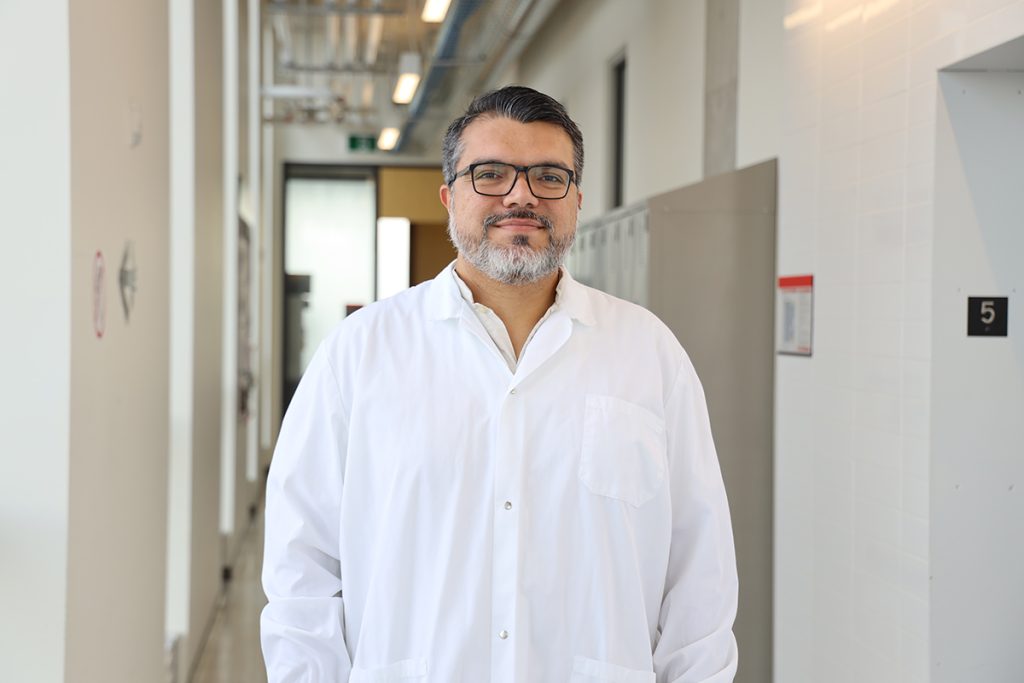
Argel Aguilar-Valles, Ph.D., is an Associate Professor in the Department of Neuroscience at Carleton University in Ottawa. His research focuses on brain function, neuroplasticity and the effects of psychedelic compounds. In his latest study, Prof. Aguilar-Valles and his colleagues explored whether psilocybin could help the brain recover from repeated mild head injuries. In rats, they found changes in brain swelling, blood-flow regulation, brain connectivity and phosphorylated tau. In this interview, Prof. Aguilar-Valles explains what these findings mean, how psilocybin may affect the injured brain, and what would be needed before the approach could be tested in humans.
The current image has no alternative text. The file name is: argel-aguilar-valles-1200x800-1.jpg

Repeated head injuries have been linked to long-term risks such as CTE, dementia and Parkinson’s disease. Can your research help us better understand what happens in the brain after these injuries?

Yes. One of the challenges with repeated mild head injuries is that the brain may look relatively normal on a conventional scan even though important biological changes are occurring. In our rat model, repeated impacts caused brain swelling, abnormal blood flow regulation, disrupted communication between brain regions, and increased phosphorylated tau. By examining these changes together, our study helps show how repeated injuries can affect the brain at several levels and identifies biological processes that could eventually be targeted therapeutically.

Your study found a reduction in phosphorylated tau following psilocybin treatment. How significant is that finding given the role of tau in neurodegenerative diseases?

It is an encouraging finding because the abnormal accumulation of phosphorylated tau is a defining feature of CTE and is also found in Alzheimer’s disease and other neurodegenerative conditions. In our study, repeated head impacts increased soluble phosphorylated tau, and psilocybin brought it back close to the level observed in uninjured animals. However, we studied the animals only three weeks after injury, so this likely represents an early stage of tau pathology rather than the mature deposits seen in advanced disease. We also found no definitive evidence that psilocybin reduced the insoluble, aggregated form of tau. The results therefore suggest that psilocybin may influence an early process associated with neurodegeneration, but they do not show that it prevents CTE or dementia.

For athletes who have experienced many concussions over the years, an important question is whether anything can be done before more serious neurological problems develop. Are your findings a first step in that direction, or is it still too early to say?

They are a first step, but it is still much too early to recommend psilocybin as a treatment. Our findings provide proof of principle that some biological consequences of repetitive mild head injury may be modifiable. Other animal studies have also reported benefits when psilocybin was administered months or even a year after brain injury, raising the possibility that there may be more than one therapeutic window. Nevertheless, we still need to determine when treatment is most effective, how long its effects last, whether it works after different types of injury and whether the benefits require its psychedelic effects. Most importantly, we need controlled studies in people to establish safety and effectiveness.

When we talk about CTE, dementia or Parkinson’s disease, how important is it to distinguish what you are seeing in an animal model from an actual clinical effect in humans?

That distinction is essential. Our model reproduces selected biological features associated with repetitive head injury, but a rat cannot reproduce the full complexity of human concussion or diseases that may develop over decades. We measured changes associated with future neurological risk; we did not demonstrate that the animals developed CTE, dementia or Parkinson’s disease. The dose, timing and controlled nature of treatment also differ substantially from what would be practical or safe in people. Animal studies are valuable for identifying mechanisms and deciding which approaches warrant clinical testing, but they cannot establish that a treatment will prevent or reverse disease in humans.

If these findings are confirmed in human studies, what could they eventually mean for people who have experienced repeated head impacts over many years—for example, professional athletes, military personnel or people who already have symptoms following previous injuries?

If the results translate to humans, psilocybin-based treatments might eventually be investigated as a way to reduce some of the continuing biological consequences of repeated head injury, rather than simply managing individual symptoms such as headache, depression or sleep disturbance. They might help normalize blood-vessel function, support communication between brain regions and engage repair-related processes while limiting harmful changes such as abnormal tau accumulation. The long-term goal would be to preserve brain function and possibly reduce the risk or severity of later neurological problems. That possibility is exciting, but it remains hypothetical. Psilocybin should not currently be used to self-treat concussion, particularly without medical supervision, because its safety and effectiveness in people with brain injuries have not yet been established.

Share Your Opinion, Publication, or other Engagement!

Share Your Opinion, Publication, or other Engagement!

OUR NEWSLETTER

© 2026 New Healthcare d.o.o. All Rights Reserved.