
Blogs

Read expert insights on current affairs in healthcare!

Psychedelics and American Policy: Is Trump’s Decision a Historic Precedent?

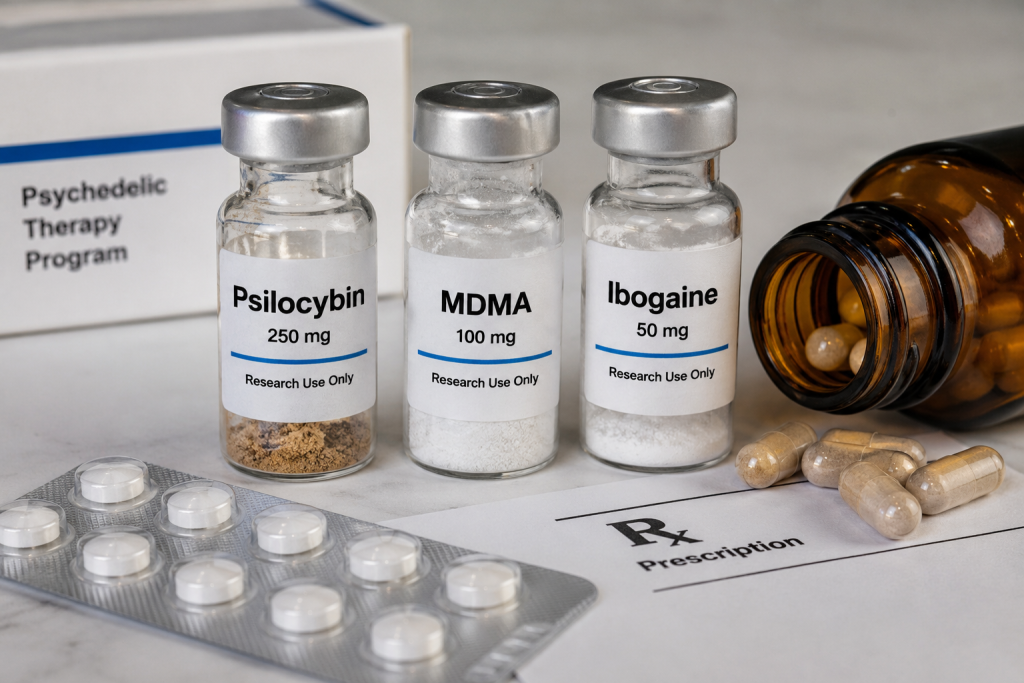
In April 2026, U.S. President Donald Trump signed an executive order aimed at accelerating regulatory pathways for psychedelic therapies, particularly for substances such as ibogaine, psilocybin, and MDMA. The decision sparked strong reactions across medical, legal, and political circles because it represents a significant departure from the traditional American “war on drugs” approach. Although this is not the first instance of psychedelic liberalization or medical use worldwide, it is an exceptionally unusual move at the level of the U.S. federal government. What makes the initiative particularly significant is that it comes from a Republican administration historically associated with strict drug enforcement and “law and order” politics.

Psychedelic therapies have existed on the margins of medicine and scientific research for decades. In recent years, several countries have gradually liberalized or institutionalized their medical use. Switzerland has permitted limited psychedelic-assisted therapy programs since the 1990s. Canada began granting special exemptions for psilocybin use in palliative care in 2019. Australia became the first country in 2023 to nationally authorize psychiatrists to prescribe MDMA and psilocybin for specific psychiatric diagnoses. U.S. states such as Oregon and Colorado have already developed legalization or decriminalization models for psilocybin.
In other words, the medical use of psychedelics is not itself unprecedented. However, the U.S. federal executive branch has never before taken such a direct and politically powerful step toward their institutional integration.
The current image has no alternative text. The file name is: fb3faf17-b7c3-49fc-851f-a4381629a045.png

Why Trump’s Executive Order Is Different

The crucial distinction lies not merely in permitting research, but in actively accelerating the regulatory process.
The executive order: directs the Food and Drug Administration (FDA) to fast-track evaluations of psychedelic therapies, allocates federal funding for research, publicly signals the possibility of rescheduling certain Schedule I substances, and explicitly connects psychedelic therapies to veterans’ PTSD treatment and the broader mental health crisis.
Particularly noteworthy is the fact that psychedelics such as ibogaine remain formally classified as Schedule I substances under U.S. federal law — a category reserved for drugs considered to have no accepted medical use and a high potential for abuse. In that sense, the decision represents an institutional shift within the American regulatory framework itself.

The Legal Dimension: Between Prohibition and Medical Necessity

The American drug control system is primarily based on the Controlled Substances Act of 1970, under which psychedelics such as LSD, psilocybin, and ibogaine are classified as Schedule I substances. Schedule I classification implies: a high potential for abuse, no currently accepted medical use, and a lack of accepted safety for medical supervision.
At the same time, a growing body of clinical research suggests that psychedelic-assisted therapies may be effective in treating: PTSD, treatment-resistant depression, addiction, and anxiety disorders.
As a result, legal scholars and medical experts increasingly question whether current regulatory classifications remain scientifically justified.

A Political Precedent

One of the most remarkable aspects of the initiative is the political coalition that enabled it. Support for psychedelic therapies in the United States no longer comes primarily from countercultural or progressive movements, but increasingly from: veterans’ organizations, conservative political figures, medical deregulation advocates, and supporters of the “Right to Try” philosophy. The “Right to Try” movement is based on the idea that terminally ill or severely suffering patients should have access to experimental therapies before the completion of all regulatory procedures.
By linking psychedelic therapies to veterans suffering from PTSD, advocates managed to build unusually broad bipartisan support around the issue. Perhaps the greatest precedent here is not legal, but political. A Republican president associated with decades of “war on drugs” rhetoric is now publicly promoting psychedelic therapies and directing federal agencies to accelerate their approval pathways. Symbolically, this represents a break from generations of American prohibitionist drug policy.
Several analysts have already described the move as the possible beginning of a new era in U.S. drug policy — one in which psychedelics are increasingly viewed not through the lens of criminal law, but through the frameworks of mental health and public health.

Conclusion

Trump’s executive order is not a complete global precedent, since other countries and U.S. states have already liberalized or medically regulated psychedelics. Nevertheless, it is unprecedented in terms of the level of political endorsement and institutional mobilization coming from the highest level of the U.S. federal government.
The decision may have long-term consequences: for international drug policy, for the development of psychiatric treatments, for regulatory standards, and for the broader relationship between medicine, politics, and criminal law. If the regulatory momentum continues, 2026 may ultimately be remembered as the year psychedelics first entered the mainstream of American healthcare policy.

Share Your Opinion, Publication, or other Engagement!

Share Your Opinion, Publication, or other Engagement!

OUR NEWSLETTER

© 2026 New Healthcare d.o.o. All Rights Reserved.