
Blogs

Read expert insights on current affairs in healthcare!

The World Health Organization after the U.S. Withdrawal: Reform or Gradual Marginalization?

The withdrawal of the United States from the World Health Organization has opened a new phase in reassessing the role and sustainability of this key institution of global health governance. Although this move represents a powerful political signal, it is also a symptom of deeper structural problems—financial instability, political fragmentation, and the growing crisis of multilateralism. In this context, the central question is whether WHO can implement the necessary institutional and financial reforms to preserve its coordinating role in global health, or whether it will gradually yield space to new actors and regional initiatives.

The World Health Organization was founded in 1948 as a specialized agency of the United Nations responsible for global public health and the coordination of international health policies. Its foundational document, the Constitution of the World Health Organization, enshrined core principles—the right to health as a fundamental human right and the importance of cooperation among Member States to achieve this objective.
In the 21st century, however, WHO has faced increasing pressure: financial constraints, a growing number of global health actors, uneven implementation of international health rules, and most recently, the formal withdrawal of the United States.
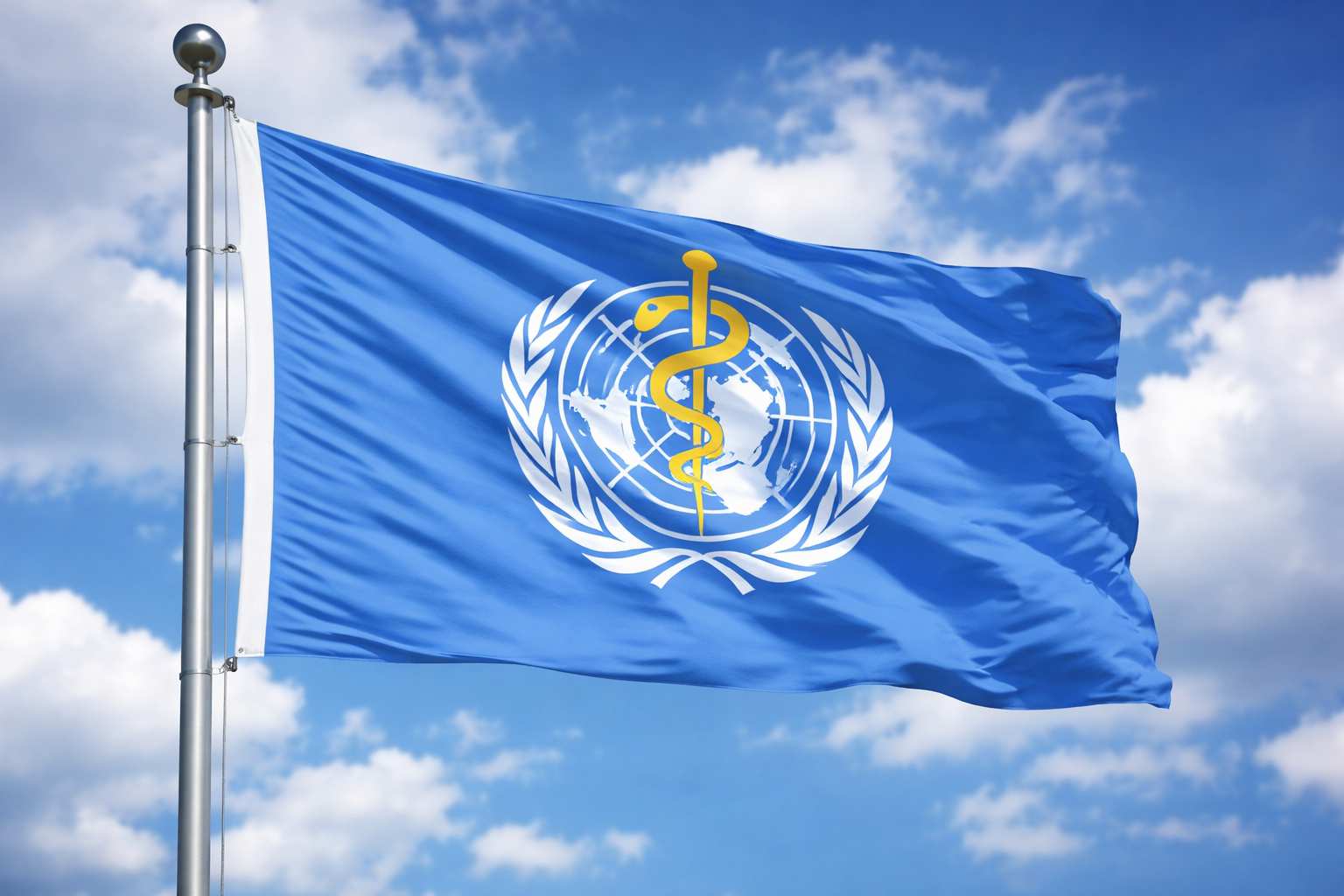
The U.S. Withdrawal: Facts and Consequences

On 22 January 2026, the United States formally completed its withdrawal process, leaving WHO for the first time since being one of its founding members in 1948. The reasons cited by U.S. authorities included dissatisfaction with the management of the COVID-19 pandemic, concerns about transparency and the pace of reforms, perceptions of political influence by certain member states, and disproportionate financial obligations.
Health policy experts have warned that the loss of WHO’s largest financial contributor significantly weakens the organization’s capacity to combat global health threats. The consequences include a substantial reduction in budgetary resources, risks to key infectious disease programs, potential loss of influence in global health coordination, and the need to reorganize institutional priorities.

Long-Standing Structural Challenges

The U.S. withdrawal is only the most visible manifestation of systemic challenges that have affected WHO for years. WHO is financed through a combination of assessed contributions from member states and voluntary donations. Chronic delays and non-payment of assessed contributions—along with heavy reliance on earmarked voluntary funding—have resulted in unpredictable revenue streams, fragmented priorities, and limited long-term strategic capacity.
In addition, the global financial climate following the COVID-19 pandemic has reduced development assistance and health funding, particularly affecting low- and middle-income countries (LMICs), thereby increasing pressure on WHO’s operational capacity.
One of the most important legal frameworks guiding WHO’s work is the International Health Regulations (IHR 2005), a legally binding instrument obliging member states to prevent, detect, and respond to public health threats of international concern. The IHR defines state obligations to establish surveillance and response capacities, the duty of timely notification of public health risks to WHO, and coordination mechanisms for international responses in crisis situations.
However, disparities in national capacities and political resistance to comprehensive implementation continue to undermine the effectiveness of global cooperation during health emergencies.

Legal Foundations for Reform

The Constitution of the World Health Organization should serve as the primary legal basis for any future amendments to the financing model and decision-making mechanisms. The International Health Regulations remain the cornerstone of global health security, and their continued revision and strengthened implementation will be decisive for future crisis preparedness. The WHO Basic Documents—which include financial regulations, rules of procedure, and governance frameworks—will be central to administrative and financial reform efforts.
In the post-U.S. era, WHO faces several fundamental questions. Ensuring financial sustainability requires reforming the funding structure to reduce dependence on a small number of major donors and to strengthen predictable core financing.
Effective implementation of the IHR and enhanced global cooperation require stronger member state commitments and improved coordination mechanisms. Geopolitically, other powers—including China or regional alliances—may increase their influence in global health initiatives. Internally, greater transparency, more efficient decision-making processes, and stronger engagement with civil society are necessary.
Without successful reforms, WHO risks a gradual decline in influence and weakened global health security—with serious implications for member states and populations worldwide.

Conclusion

The US withdrawal from the World Health Organization and the multi-year financial and organizational challenges clearly indicate that the WHO is at a turning point. Its future will depend on its ability to respond to the modern dynamics of global health risks, strengthen its legal and financial framework, and preserve international cooperation—a key component for responding to global health threatse.
Otherwise, the world could face a fragmented public health system, where instead of a unified global response, each country seeks to address crises in isolation—which is at odds with addressing transnational health threats.

Share Your Opinion, Publication, or other Engagement!

Share Your Opinion, Publication, or other Engagement!

OUR NEWSLETTER

© 2026 New Healthcare d.o.o. All Rights Reserved.