News

Stay ahead in global healthcare!

Stellenbosch University Empowers Youth to Tackle Global Food Crisis

As global challenges around climate change, population growth, and resource scarcity continue to intensify, food systems around the world are facing the growing challenge of meeting the complex needs of vulnerable populations. Ensuring long-term food security requires more than traditional agricultural policies; it also involves empowering the next generation of researchers, fostering innovation, preserving agricultural capacity, and taking into account what matters most to future leaders. Stellenbosch University (SU) in South Africa is an example of an academic institution that has embraced this forward-looking approach and incorporated it into youth development and food security initiatives.
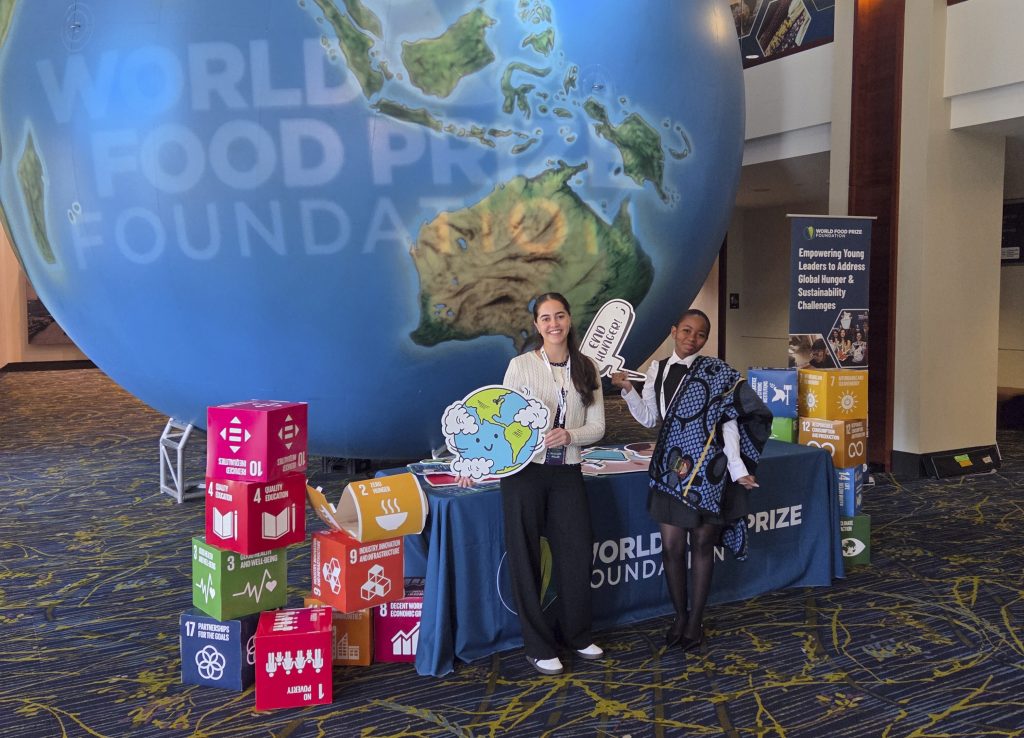
Stellenbosch University’s Faculty of AgriSciences is leading the way in Africa through the establishment of the South Africa Youth Institute, in partnership with the World Food Prize Foundation. This initiative marks the first World Food Prize Youth Institute in the Southern African Development Community (SADC) and only the fourth on the African continent. The recognition highlights SU’s commitment to providing high-quality, evidence-based research opportunities and mentorship for high school learners.
The institute brings Grade 10 learners together to research and present solutions to global food security challenges, providing a framework for youth-led innovation. Two learners—Poloko Rapport and Majoleeh Muller—were selected to represent South Africa at the World Food Prize Foundation’s Global Youth Institute in Des Moines, Iowa, USA (20–22 October 2026). In its partnership, the World Food Prize Foundation described the initiative as a key contributor to a rapidly growing global movement committed to training future agricultural leaders.

The South Africa Youth Institute: A Youth-Centred Approach to Food Security

At the South Africa Youth Institute, young learners are actively encouraged to identify global challenges and propose solutions based on rigorous research, allowing their own ideas and insights to become an important part of the global dialogue. For some students, this may mean addressing nutritional deficiencies and human health, while for others it may involve creating circular agricultural economies and reducing post-harvest waste. By focusing on what matters to each student and their target communities, the institute aims to ensure that research aligns with global needs and priorities.
Research methodology and mentorship are another important component of the approach. Students’ Global Challenge papers are regularly reviewed and refined to identify practical solutions and reduce ineffective strategies that provide limited impact. This helps academic mentors support young researchers while ensuring that every proposed solution has a clear purpose and contributes positively to global food security and sustainable development. The institute also places strong emphasis on international exposure, particularly through direct engagement with global experts. Delegates present their research in small roundtable discussions during the Global Youth Institute, held alongside the Norman E. Borlaug International Dialogue. Global experts and mentors act as active partners in the learners’ growth, enabling them to refine their critical thinking and gain valuable feedback on their proposed solutions.
Finally, youth participation is treated as an essential driver of long-term change rather than something secondary to high-level policy discussions. In the educational sector, the traditional approach of passive learning has increasingly shifted towards active research and representation. When selected, learners are encouraged to engage with international peers, participate in expert-led panels, and take part in global events designed to build leadership skills and agricultural expertise.

Promoting Sustainability and Youth Leadership in Agriculture

The approach implemented by Stellenbosch University demonstrates that addressing world hunger is not simply about technical yield, but about looking at the future of food systems as a whole. By considering students’ personal research goals, innovative solutions, scientific methodology, and global networking opportunities, institutions can provide learning pathways that are both academically rigorous and meaningful to the individual.
This model can also help reduce the barriers associated with entering agricultural and scientific fields among young people, including lack of mentorship, limited access to international platforms, and geographical isolation. Encouraging young researchers to remain active and involved in global issues can support capacity building and help nations maintain a higher level of agricultural resilience.
The example of Stellenbosch University demonstrates how educational institutions can adapt to global challenges while placing young innovators at the centre of solutions. By putting research, mentorship, global engagement, and youth empowerment into practice, Stellenbosch University has established an approach that prioritises not only scientific progress, but also opportunity, sustainability, and long-term impact. Its collaboration with the World Food Prize Foundation therefore represents an important example of how universities can respond to global challenges and provide more inclusive, empowering, and holistic development for youth.

Share Your Opinion, Publication, or other Engagement!

Share Your Opinion, Publication, or other Engagement!

OUR NEWSLETTER

© 2026 New Healthcare d.o.o. All Rights Reserved.